Staircase materials are the structural and finish components that shape how your stairs look, feel and perform, from the treads underfoot to the balustrade beside you. If you are planning a new staircase in Brisbane, the best material is not a single product or species, it is the combination that suits your climate, layout, style, budget and compliance needs.
What Makes a Staircase Material “Best” for a Brisbane Home
In staircase design, “materials” usually refers to the parts you can see and the parts doing the hard work behind the scenes. Treads are the horizontal surfaces you step on. Risers are the vertical faces between treads on a closed stair. Stringers carry the stair structurally, either from the sides or underneath. Balustrades and handrails provide safety, support and a large part of the finished visual style.
The best staircase materials for your home depend on how those parts need to function together. A timber tread may be ideal indoors because it feels warm, looks natural and ties in with timber flooring. The same tread in an exposed outdoor location may need a different species, finish or support system to handle sun and rain. A steel stringer may offer the slim profile you want, but it still needs the right coating, fixing method and detailing for the site.
That is why there is no universal winner. One Brisbane project may suit solid hardwood treads on steel stringers with glass balustrades. Another may work better as a concrete stair with tiled finishes, or a galvanised outdoor stair built for weather exposure. “Best” means the material performs well in your conditions and supports the overall design, not that it tops a generic list.
Why Brisbane Conditions Matter
Brisbane conditions change the conversation quickly. Heat, humidity, strong UV, summer storms and indoor-outdoor living all affect how staircase materials age and how much maintenance they need. Materials that look similar in a showroom can behave very differently after a few years in a subtropical home.
Humidity matters most with timber, because natural movement expands and contracts boards over time. UV exposure affects finishes, colours and surface coatings, especially near large glazing or on exposed external stairs. Rain and storm-driven moisture increase the importance of drainage, corrosion resistance and slip resistance. Salt exposure can also matter in coastal-adjacent areas.
Internal and external staircases should not be treated as the same problem. Internal stairs usually prioritise comfort underfoot, appearance, acoustics and integration with surrounding interiors. Outdoor stairs need to handle water, sun, debris and temperature changes with much less margin for error.
The Main Staircase Materials Used in Brisbane
Most custom staircases in Brisbane use one primary structural material and one or more finish materials. The main categories are timber, metal, concrete, stone or tile, and glass. In many homes, the final stair is a combination rather than a single material from top to bottom.
Your choice is not just aesthetic. Materials influence span capability, stair thickness, visual weight, detailing, lead times, fabrication methods and how the staircase connects to the house. If you are comparing standard and fully custom stair approaches, material flexibility is often one of the biggest differences.
Timber
Timber remains one of the most common staircase materials for Brisbane homes because it is adaptable and easy to pair with different architectural styles. It can feel refined or relaxed depending on species, stain, profile and finish. Common choices include American oak, Victorian ash, blackbutt, spotted gum and pine, with merbau or kwila sometimes used where extra durability or a darker tone is preferred.
The appeal is straightforward. Timber adds warmth, softens hard finishes and works across Queenslanders, coastal homes, contemporary interiors and high-end architectural spaces. It can be used for full staircases, feature treads, handrails and stair components paired with steel or glass.
The trade-off is movement and maintenance. Timber needs appropriate detailing, sealing and species selection for its location. Some species and finishes are better suited to internal use, while others are more durable in semi-exposed conditions.
Steel and Aluminium
Metal is often used where strength, slim profiles and a cleaner architectural look are important. Steel is common for stringers, balustrades, handrails and feature stair frames. It allows open-riser designs and cantilevered-looking forms that would be difficult to achieve with bulkier construction.
Steel is strong and versatile, but it needs the right finish. Internally, painted or powder-coated steel can perform well with relatively modest upkeep. Externally, galvanising and coating systems become more important, especially in exposed or coastal-adjacent settings.
Aluminium is lighter and naturally more corrosion resistant than steel, which makes it attractive for some external stair elements and balustrades. The limitation is that it does not always deliver the same visual weight, span capacity or feel as steel in premium feature stair designs.
Concrete, Stone and Tiled Finishes
Concrete usually appears as the structural base of a staircase rather than a decorative surface on its own, although polished concrete stairs are sometimes used in minimalist homes. It suits modern builds, external entries and projects where durability and mass matter more than visual lightness.
Stone and tile are often finish materials applied over a structural stair. They can create a precise, high-end appearance and work well with outdoor areas, entry stairs and homes using similar finishes elsewhere. Surface selection matters because some stone and tile products become slippery when wet.
The downside is complexity. Concrete and masonry-based stair systems are heavy, require careful structural planning and are harder to alter once built. Stone and tiled finishes also demand good substrate preparation and detailing to avoid cracking, drummy areas or water issues over time.
Glass and Mixed-Material Designs
Glass is rarely the main structural material for a staircase. In most homes, it is used in balustrades or guarding panels alongside timber, steel or concrete. Its value lies in preserving light, maintaining views and reducing visual bulk, especially in tighter floor plans.
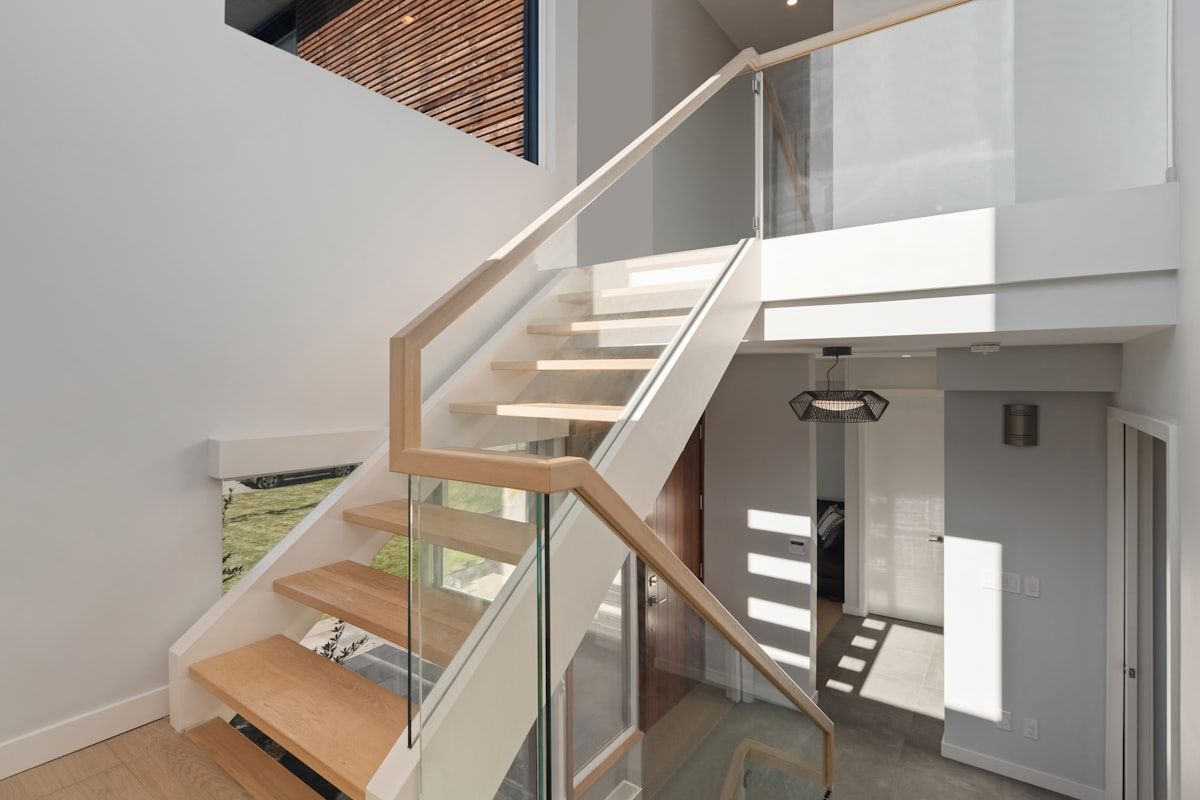
For contemporary and luxury homes, glass can make a staircase feel less intrusive. It works particularly well with open-riser stairs and slim steel stringers, where the aim is visual openness rather than heaviness.
The practical trade-off is maintenance. Glass shows fingerprints, dust and water spotting more than most materials. It also needs precise installation and compliant detailing, particularly around balustrade performance and edge protection.
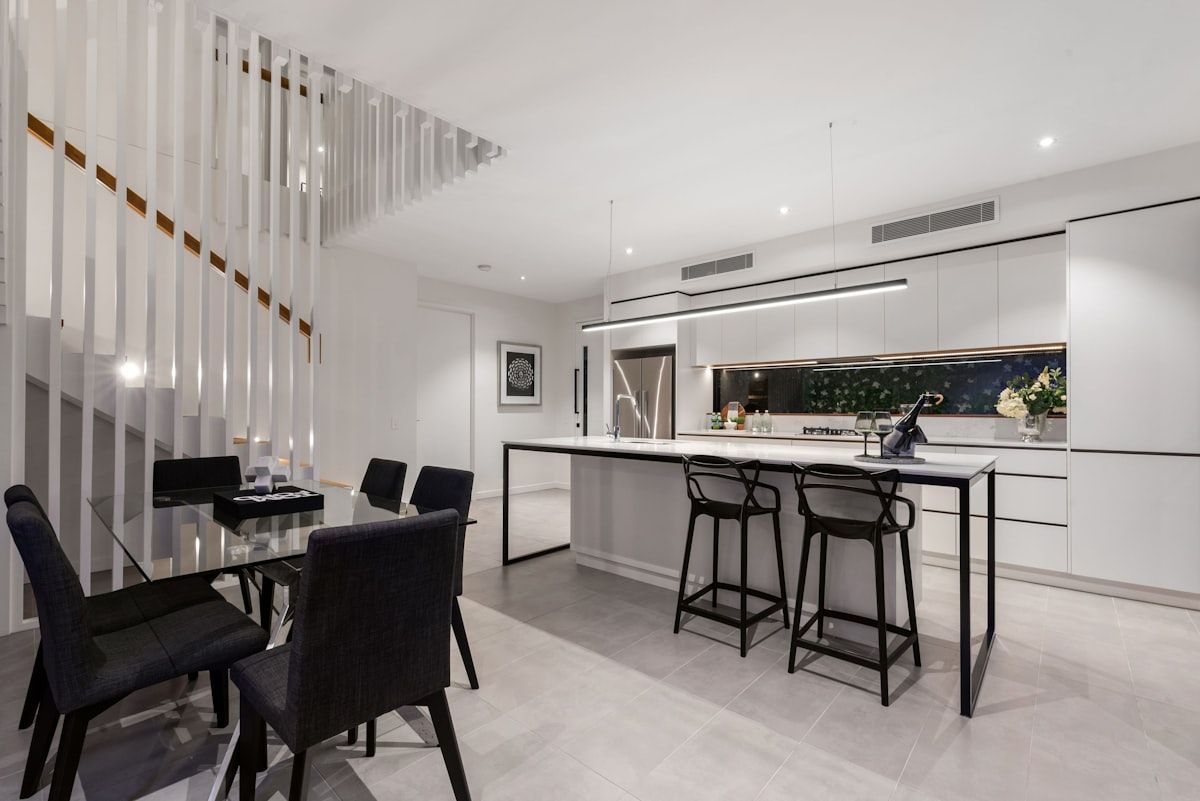
Timber Staircase Materials: The Most Popular Choice for Custom Homes
Timber often becomes the reference point when homeowners start comparing staircase materials. That is partly because it is familiar, but also because it gives you more room to adjust tone, grain, profile and finish without changing the whole stair concept.
In custom homes, timber can be the feature or the supporting element. A full timber stair creates continuity and warmth. Timber treads on steel stringers create contrast. Timber handrails can soften glass and metal. It is one material category, but it supports very different outcomes.
Hardwood vs Engineered Timber
Solid hardwood treads are cut from natural timber and usually offer the most authentic grain, edge detailing and refinishing potential. They are often preferred where the stair is a visible design feature and you want long-term durability with a premium feel.
Engineered timber products use a timber wear layer over a stable substrate, or laminated construction designed to reduce movement. For stair components, that can improve dimensional stability and make some species more practical in wider sections. In Brisbane conditions, that extra stability can be useful where humidity changes are a concern.
The catch is appearance and detailing. Some engineered products look excellent once installed, while others are better suited to matching adjacent flooring than serving as a high-end exposed tread. The quality of the product and edge finish matters a lot.
Comparing Popular Timber Species
American oak is popular for lighter, premium interiors. It has a relatively even grain and works well in contemporary, coastal and refined classic homes. Victorian ash is another lighter option, often chosen for its clean appearance and versatility across painted or natural schemes.
Blackbutt and spotted gum are common Australian hardwoods with higher hardness and stronger natural variation. Blackbutt generally offers a lighter, warm tone, while spotted gum can show more movement in colour and grain. Both are well suited to family homes and projects where durability matters.
Pine sits at the more budget-conscious end of the market. It can work in painted staircases or simpler designs, but it is softer and more prone to denting than hardwoods. Merbau or kwila is dense and durable with a darker colour, though it creates a more specific look that will not suit every interior.
Best Uses for Timber in Stair Design
Timber is flexible enough to suit almost every staircase layout. Full timber stairs suit traditional homes, Queenslanders and interiors where joinery and flooring already carry timber tones. If you are planning a heritage-sensitive renovation, material choices often need to align with the proportions and character discussed in stair styles that suit older Brisbane homes.
Open-riser stairs commonly use timber treads with steel supports to avoid visual heaviness. Timber is also a strong choice for handrails because it feels comfortable in use and can tie different stair elements together.
In design terms, timber is often the bridge between styles. It can read coastal, contemporary, classic, minimalist or luxurious depending on how it is detailed. Few staircase materials can shift that easily.
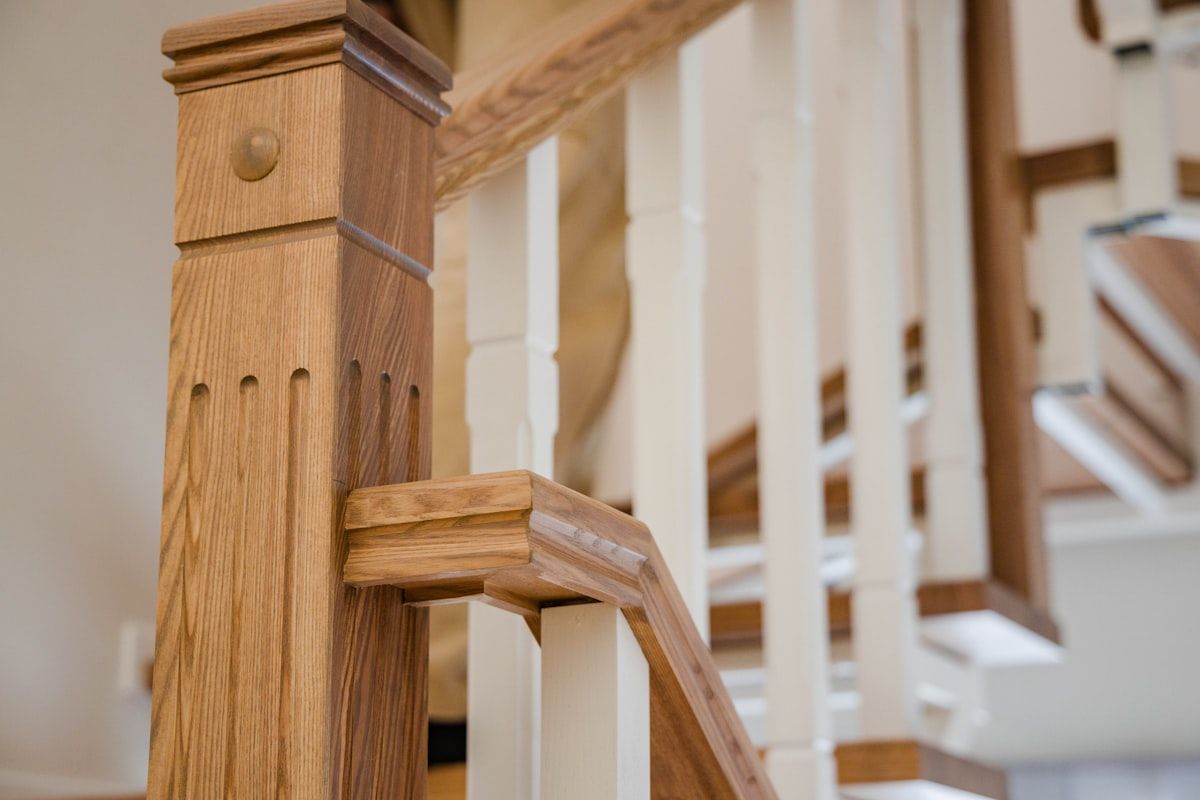
Comparing Staircase Materials by Performance
A staircase is used every day, often many times a day. So performance matters as much as appearance. The right comparison is not “which material looks best”, but “which material suits how your stair will actually be used”.
Durability, Structural Strength and Longevity
Steel and concrete are usually the strongest structural performers for long spans, heavy use and demanding applications. They are common where a stair needs to carry significant load with minimal visual bulk or where the stair structure is exposed to weather and wear.
Hardwood timber performs very well in everyday homes, especially for treads and handrails. It can last for decades when properly detailed and maintained. Softer timbers wear faster, particularly on leading edges and high-traffic stairs. Stone is durable on the surface, but chips can be more difficult to disguise than wear on timber.
Aluminium performs well in corrosion-prone outdoor settings, though it is not always the first choice for feature structural elements. For high-use entry stairs or investment properties, the best result usually comes from matching structural strength with a finish that can tolerate repeated wear.
Maintenance, Repairs and Refinishing
Timber needs periodic care, especially if you want to preserve its colour and finish quality. Indoors, that may mean cleaning, recoating and eventually sanding and refinishing. The advantage is that many timber surfaces can be restored rather than replaced.
Steel can be low-maintenance if it is well finished and protected, but chips in paint or powder coat should not be ignored, particularly outdoors. Aluminium generally asks for less in corrosion management, though surface finishes still weather over time.
Glass needs frequent cleaning if you want it to stay crisp. Stone and tile are durable but harder to repair invisibly if chipped. Concrete is durable too, though cracks, staining or finish defects can be harder to correct after installation.
Slip Resistance and Safety
Slip resistance matters on every staircase, but it becomes much more serious outdoors in Queensland conditions. Wet treads, pool areas, storm runoff and leaf debris all increase risk.
Material choice affects safety, but finish selection is just as important. Smooth polished timber, stone or tile can become slippery, while textured coatings, appropriate nosings and profile choices improve grip. Outdoor stairs usually need a more deliberately slip-resistant surface than internal stairs.
Compliance also matters here. Riser consistency, going dimensions, handrails and balustrade design all interact with material choice. If you want a clearer breakdown of the rules, this guide to Brisbane stair code requirements covers the main issues in plain language.
Choosing Materials for Indoor vs Outdoor Staircases
Indoor and outdoor stairs may look related, but they operate in very different environments. A material that performs beautifully inside may become a maintenance problem outside.
Best Materials for Internal Staircases
For internal staircases, timber remains the most versatile choice. It is comfortable underfoot, quieter than harder finishes and easy to coordinate with flooring, joinery and furniture tones. Steel-and-timber combinations are especially common in modern homes because they balance warmth with a cleaner profile.
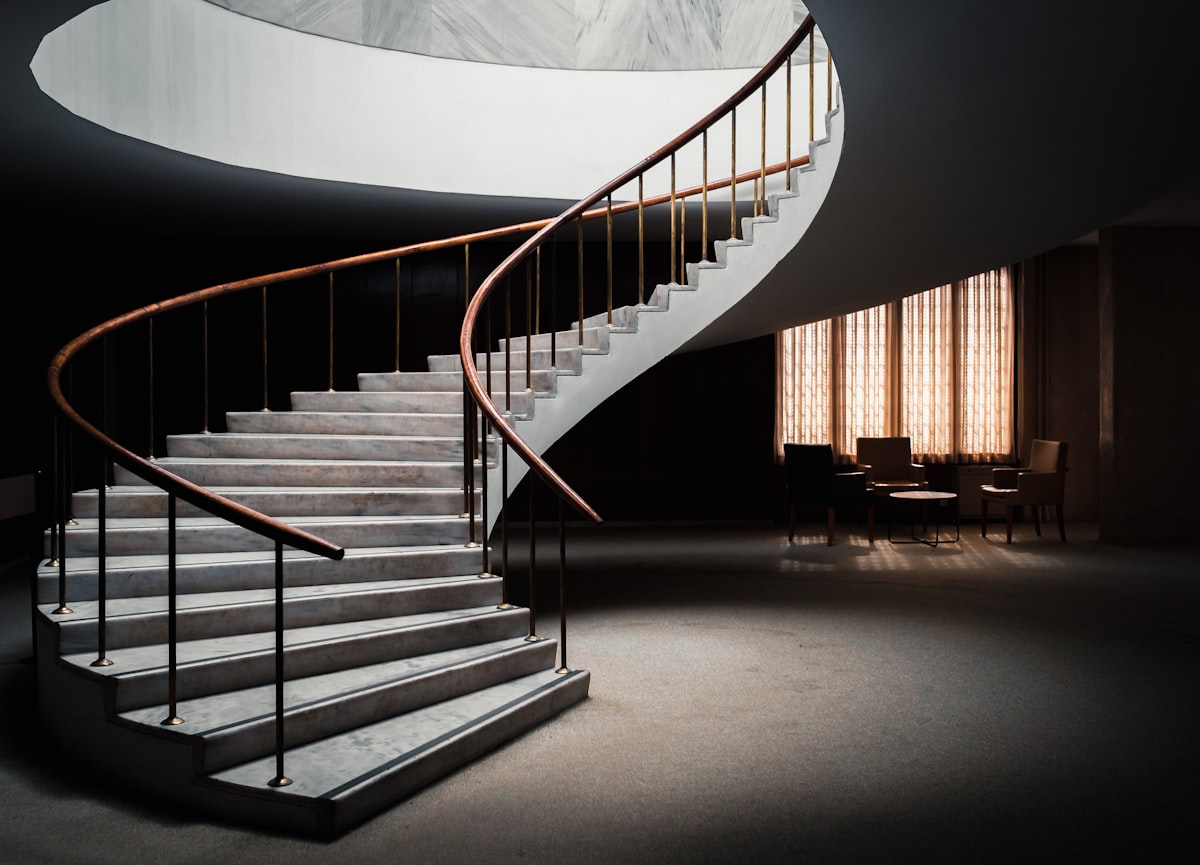
Concrete can work well in contemporary builds, particularly where the stair is integrated into the structure from the start. Glass balustrades suit interiors that need more light or visual openness. In many homes, a mix of timber treads, steel structure and glass balustrades creates the right balance between function and visual lightness.
Best Materials for External Staircases
External stairs need stronger resistance to water, UV and corrosion. Galvanised steel, powder-coated steel, aluminium, concrete, stone and selected durable hardwoods are all used, but not in the same way and not with the same maintenance profile.
Galvanised steel is a practical choice for exposed structures because it handles weather well when detailed properly. Aluminium suits some outdoor applications where lighter weight and corrosion resistance matter. Concrete is reliable and durable for ground-connected external stairs. Stone and outdoor-rated tiles can work well if slip resistance and drainage are handled carefully. Timber outdoors needs more caution, with species, fixing details and finishing doing a lot of the work.
Style, Budget and Design Flexibility
Material choice shapes the look of the staircase, but it also affects how freely the design can be customised. A stair is part structure, part joinery, part architectural feature. Some materials give you more room to push one of those roles than others.
Matching Materials to Home Style
Queenslanders often suit painted stair structures, natural timber treads, traditional balustrade forms or combinations that respect the character of the home. Hamptons-inspired homes usually pair well with light timbers, painted details and simple profiles. Minimalist renovations and modern new builds often favour timber with steel or glass for a cleaner, lighter look. If that direction fits your project, it helps to understand how clean-lined stair forms are usually detailed.
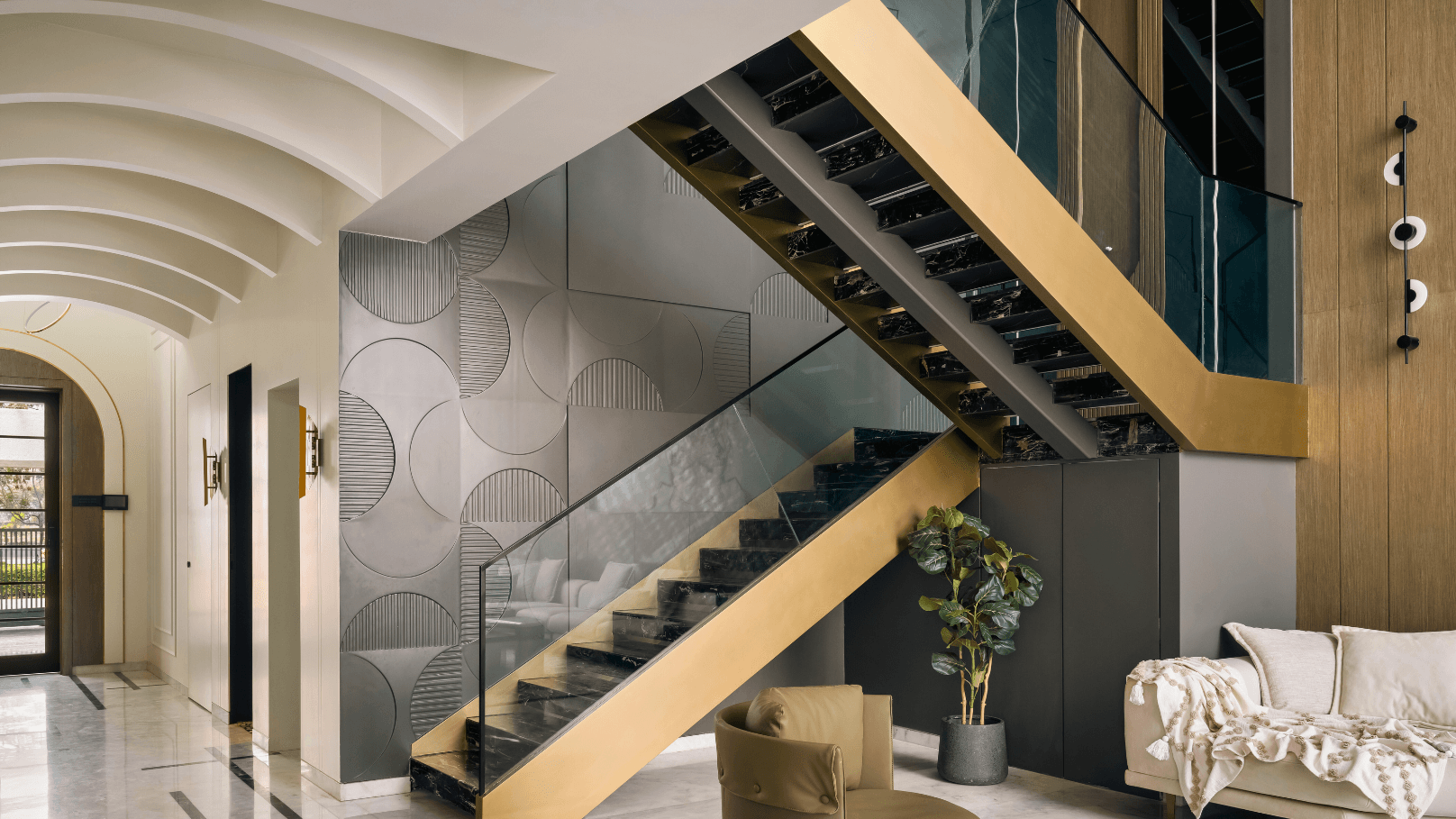
Luxury architectural homes often use mixed-material stairs with stronger contrast, such as thick hardwood treads, slim steel supports and frameless-style glass. The point is not to chase a trend. It is to choose materials that feel consistent with the rest of the house.
Budget Ranges and Value Considerations
Material cost matters, but it is only part of the total staircase budget. Design complexity, fabrication, finishing, engineering, transport and installation often make as much difference as the material itself.
A simpler hardwood stair may cost less than a highly detailed steel-and-glass feature stair, even if the timber species is premium. Likewise, an outdoor stair with difficult access, heavy structural demands or complex fixings can cost more than its material list suggests. If you are comparing options, it helps to review what actually drives the total cost of a staircase before focusing too narrowly on timber versus steel versus concrete.
Compliance, Construction and Installation Considerations
Good material selection is only useful if the staircase can be built properly and approved for the site. This is where appearance, engineering and practical construction all meet.
Structural Support and Attachment to the Existing Home
Every staircase needs reliable support and attachment points. The stair has to work with floor levels, slab or framing conditions, wall structure and load paths. A steel stair may need different fixings and backing structure than a timber stair. A concrete stair may require early planning because of its weight and permanence.
This is one reason custom staircases should be considered early in a build or renovation. Material choice is not just about the finished surface. It changes what the house needs to support.
Australian Standards, NCC and Stair Safety Requirements
Staircases must comply with current code and site-specific requirements, including riser and going consistency, head clearance, balustrade and handrail rules, open-riser limitations and slip resistance. The National Construction Code and relevant Australian Standards set the baseline, but the exact application depends on the stair design and home.
For homeowners, the practical point is simple: do not choose materials in isolation from compliance. A beautiful stair still has to work safely and legally. Balustrade design is one area where aesthetics and regulation overlap closely, especially once heights, openings and handrail details are considered.
How to Choose the Right Staircase Material for Your Project
Choosing staircase materials becomes easier once you stop looking for the “best” product and start matching materials to the role your staircase needs to play. Feature staircases, tight renovation stairs, outdoor access stairs and family-home stairs often point to different answers.
Questions to Ask Before You Decide
Start with location. Is the stair internal, external or partly exposed? Then look at the design role. Is it meant to disappear into the background or act as a focal point? Next comes maintenance tolerance. If you do not want regular timber care or constant glass cleaning, that should shape your shortlist early.
Budget matters too, but so do household needs. Children, older occupants, pets and heavy daily traffic may influence finish choices, slip resistance and handrail design. You also need to consider compliance, structural support and whether the staircase must tie into an existing floor system or a new build.
When a Custom Mixed-Material Staircase Is the Best Solution
Many Brisbane projects are best served by combining materials rather than forcing one material to do everything. Timber treads on steel stringers can give you warmth without bulk. Glass balustrades can open up the stair while timber handrails make it more practical to use. Concrete can provide the structure while timber or tile softens the final look.
This approach works well because different staircase materials solve different problems. One material handles structure. Another improves comfort. Another reduces visual weight. For custom homes and renovations, that balance is often more useful than picking a single material category and trying to make it fit every requirement.
Common Questions About Staircase Materials
What is the best material for a staircase in Brisbane?
For internal stairs, timber and timber-with-steel combinations are often the most versatile. For external stairs, galvanised steel, aluminium, concrete and other weather-tolerant materials are usually better suited. The best choice depends on exposure, style, maintenance expectations and the role of the stair in the home.
Is timber or steel better for stairs?
Timber is usually preferred where warmth, comfort and natural appearance matter most. Steel is often chosen for strength, slimmer detailing and a more contemporary look. In many custom staircases, the strongest solution is a combination of both.
What is the lowest-maintenance staircase material?
Concrete and aluminium are often among the lower-maintenance options, especially outdoors. Some steel applications are also relatively low-maintenance if properly protected. Even so, finish quality and installation detailing still affect how much upkeep the stair needs.
Which staircase materials are safest when wet?
Materials with textured or slip-resistant finishes are safest when wet, regardless of whether the base material is timber, metal, stone or concrete. Outdoor stairs should be designed with grip, drainage and nosing details in mind, not just the surface material.
Can I combine different staircase materials?
Yes. Mixed-material staircases are common and often the most practical option. Combining timber, steel, glass or concrete can improve appearance, durability and performance by assigning each material to the role it handles best.
Frequently Asked Questions
Do indoor staircase materials need to match the floor exactly?
No. Close coordination usually works better than an exact match. Timber species, stain and finish can be selected to complement flooring without appearing forced, especially when the staircase includes steel, glass or painted components.
Are glass balustrades hard to maintain?
Glass is easy to clean but shows marks more readily than many other materials. In busy homes or near external doors, fingerprints, dust and water spotting are more noticeable, so the trade-off for visual openness is more regular cleaning.
Is solid hardwood always better than engineered timber for stairs?
Not always. Solid hardwood is often preferred for premium exposed treads and long-term refinishing potential. Engineered products can be a practical option where extra stability or material efficiency is needed, provided the product is suitable for stair use.
Can outdoor timber stairs work in Brisbane?
Yes, but species selection, finish choice, fixing details and drainage all matter. Outdoor timber needs more planning and ongoing care than many metal or concrete alternatives, especially in exposed locations.
Why do custom staircase quotes vary so much?
Material is only one factor. Stair geometry, structural support, balustrade type, finish level, engineering, access and installation complexity can all shift the price significantly. If you are ready to compare options for your home, The Staircase Studio can provide a custom staircase quote based on your site, style and material requirements.